Clean your floors. Protect the finish.
Essential floor cleaning tips for LVP, laminate, hardwood, tile and carpet, without treating every surface the same.
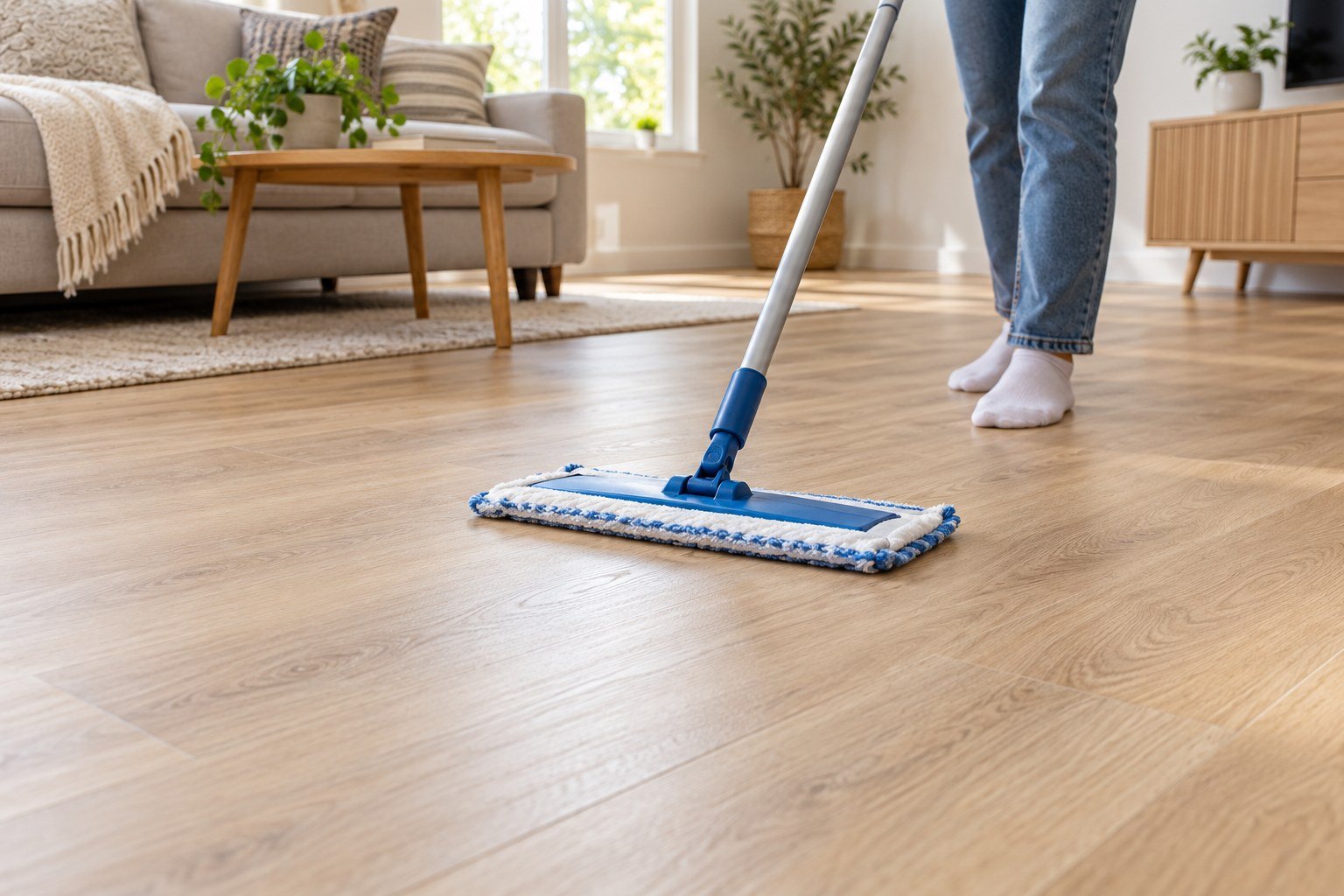
A freshly mopped floor should feel clean, not sticky or cloudy. If yours looks worse after cleaning, more soap or hotter water may be the wrong next step. Start with the floor you have, then choose a method its manufacturer allows.
The practical answer: Remove loose dirt first, clean spills promptly, and use the recommended cleaner and moisture level for your flooring. A three-step routine of sweeping, soaking and steam mopping is not a universal care plan.
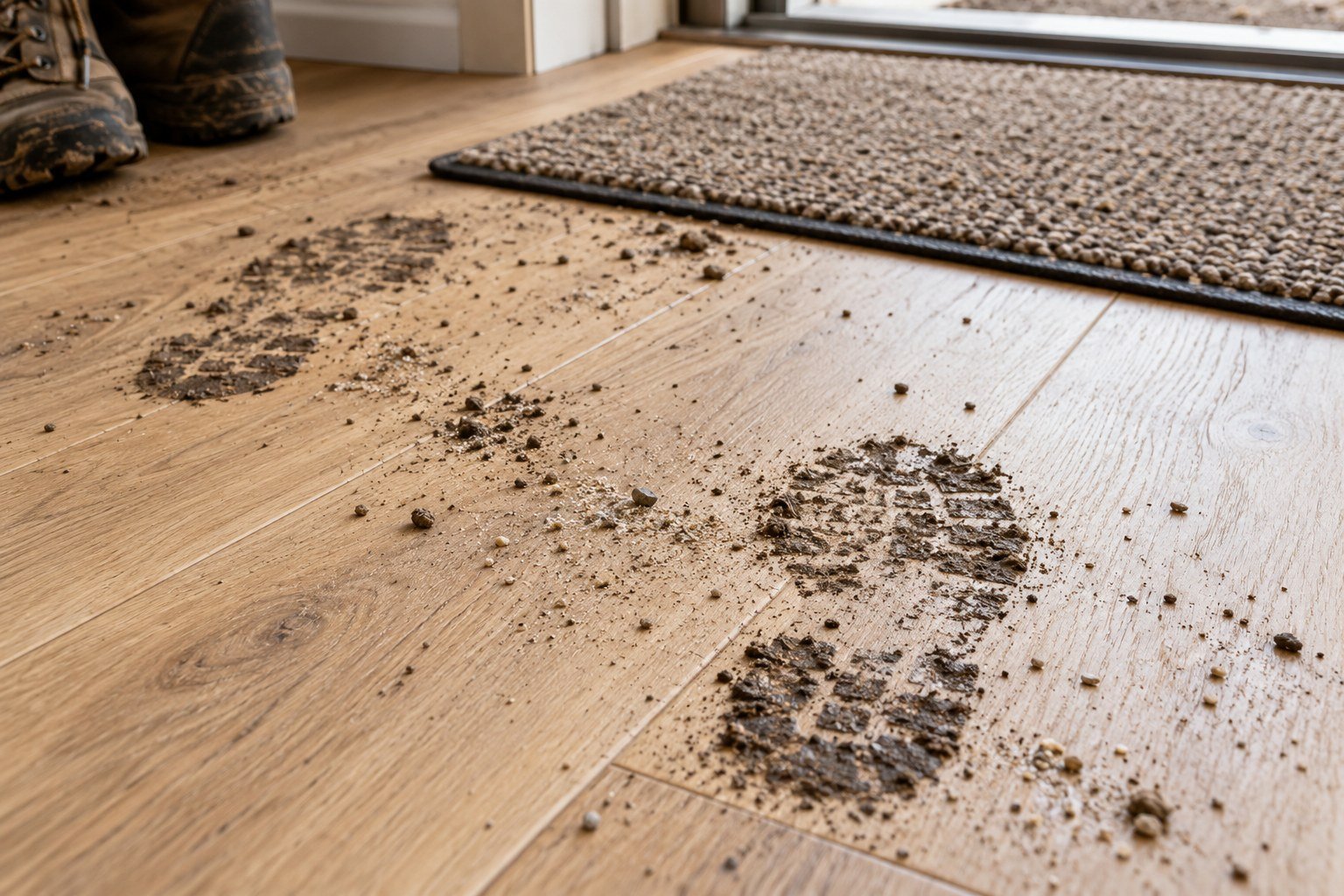
Luxury vinyl is easy to live with, but the surface still needs the right care. Sweep or dust mop grit away and wipe spills promptly. Use the cleaner specified for your LVP rather than assuming an all-purpose bottle is approved.
Shaw’s luxury vinyl guidance cautions against abrasive, ammonia-based and vinegar-based cleaners. Other products can have different instructions. Follow the guide for the floor installed in your home.
Do not choose a steam mop simply because the carton says waterproof. Confirm that the exact flooring product permits the equipment and cleaning method first.
After a rainy afternoon, remove the grit at the back door, wipe up the wet footprints, and spot-clean the marks with the recommended product. The whole room does not need soaking.
More detail: how to clean vinyl plank flooring.
Laminate can look like wood while requiring its own care routine. Start with dry soil removal and a hard-floor vacuum attachment. Avoid dragging grit across the surface.
Shaw advises against washing or wet mopping its laminate with soap and water. Use a laminate care product and application method approved for your exact floor. A water-resistant product description is not permission to leave a wet mop sitting on the seams.
Skip homemade oil mixtures and unverified cleaner recipes. They make it harder to know whether the method is compatible with the floor’s finish and care requirements.
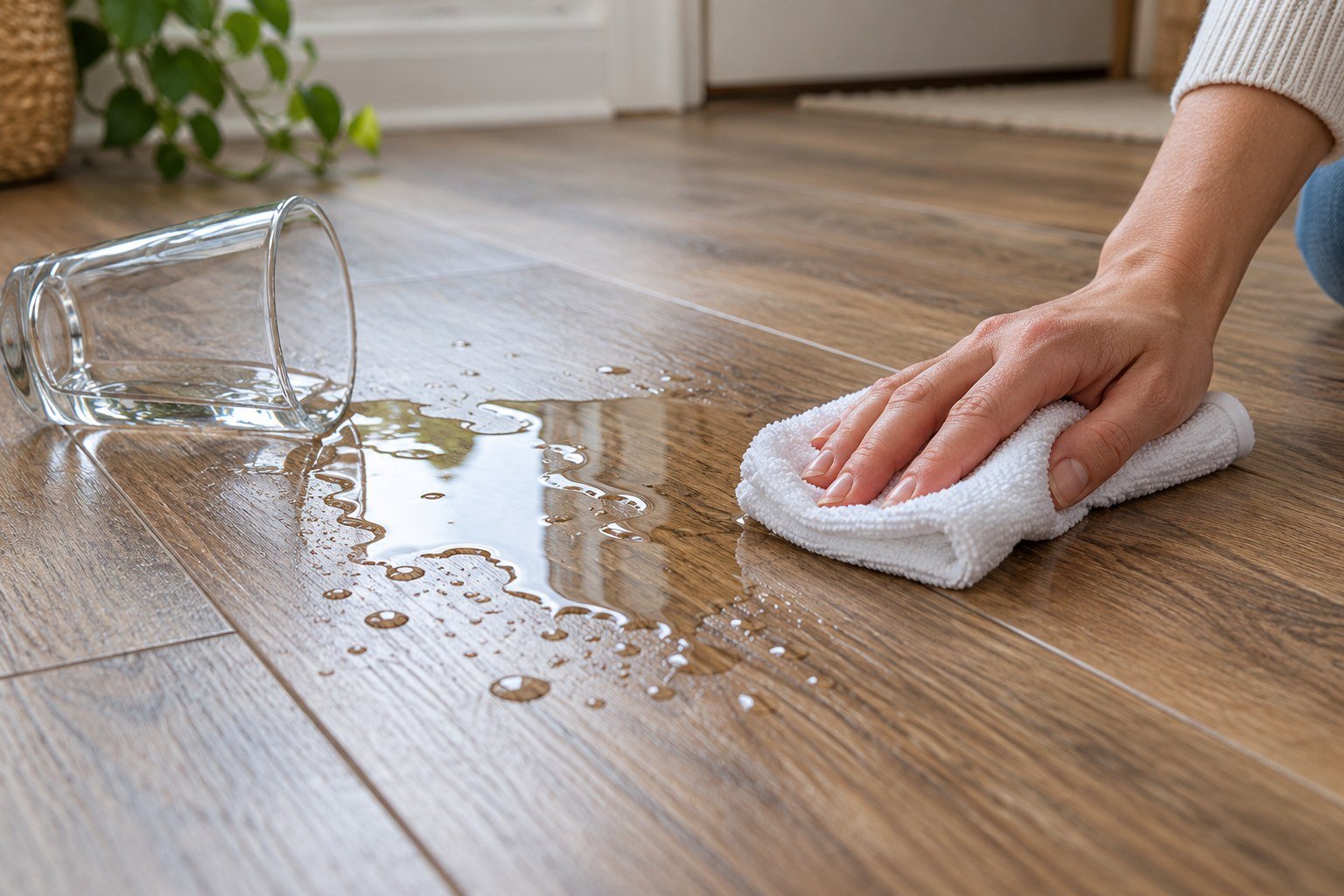
A drink tips beside the dining table. Pick it up immediately, wipe the area dry, then treat any remaining spot according to the care guide instead of wet mopping the room.
Care reference: Shaw Floors laminate care guidance. Follow the guide for your exact product.
Solid and engineered hardwood both have real wood surfaces. The finish matters: a factory-finished floor, a refinished floor and an oiled floor may have different maintenance instructions.
For its hardwood, Shaw recommends regular dry soil removal and its recommended cleaner, while advising against wet mops, steam mops and oil-based wax or polish. Do not use an olive-oil-and-lemon recipe as a general wood-floor treatment.
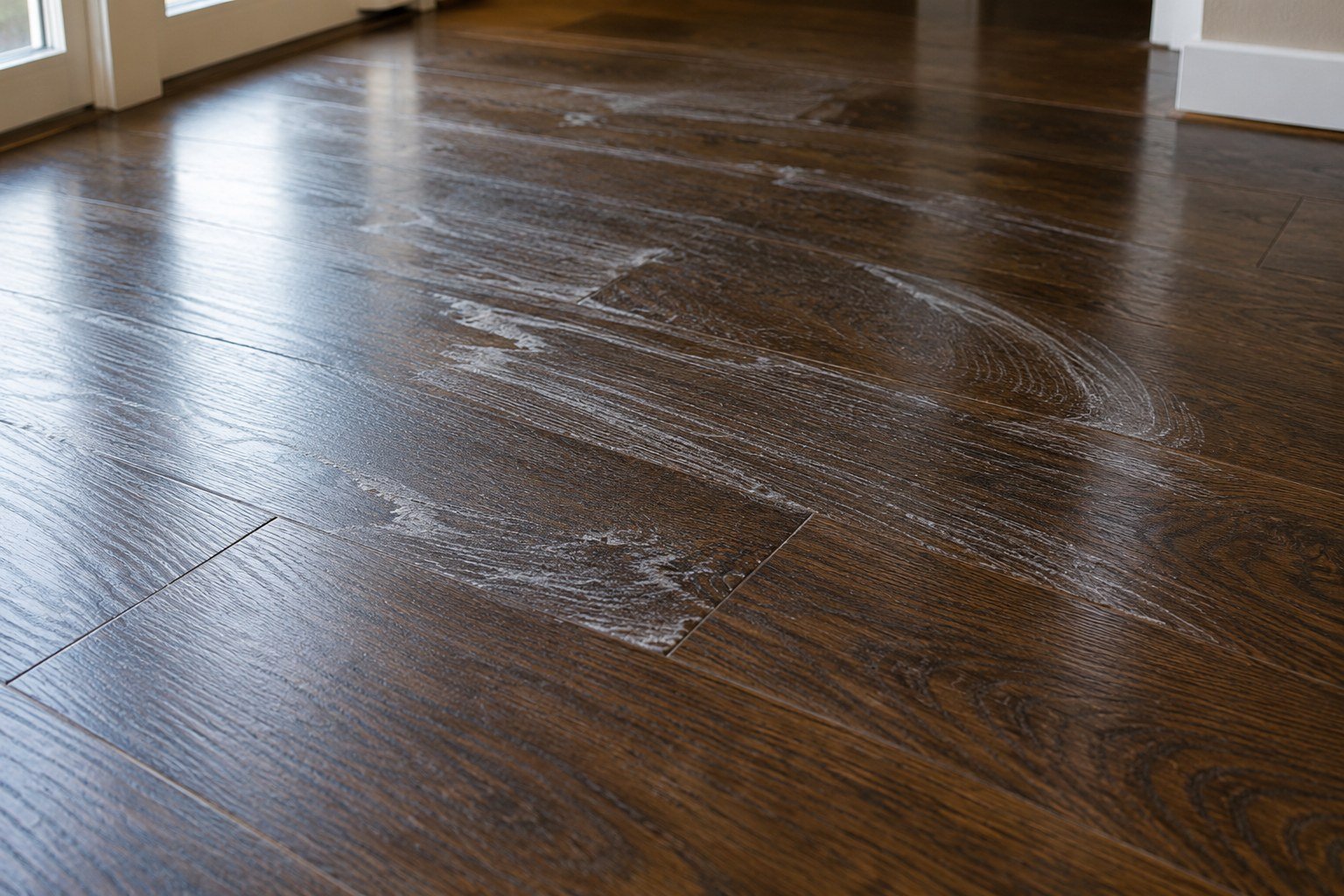
If a dull patch remains after approved cleaning, stop before adding a shine product. Cleaning residue, scratches and finish wear are different problems; identifying the cause helps you choose the next step.
Sunlight shows a dull path through the living room. Check your care history and finish type before applying polish. A cleaner cannot repair missing finish or erase a deep scratch.
Care reference: Shaw Floors hardwood care guidance. Follow the guide for your exact product.
Porcelain and ceramic tile need a cleaner that is compatible with both the tile and grout. Sweep or vacuum first, then follow the cleaner’s dilution and contact-time directions.
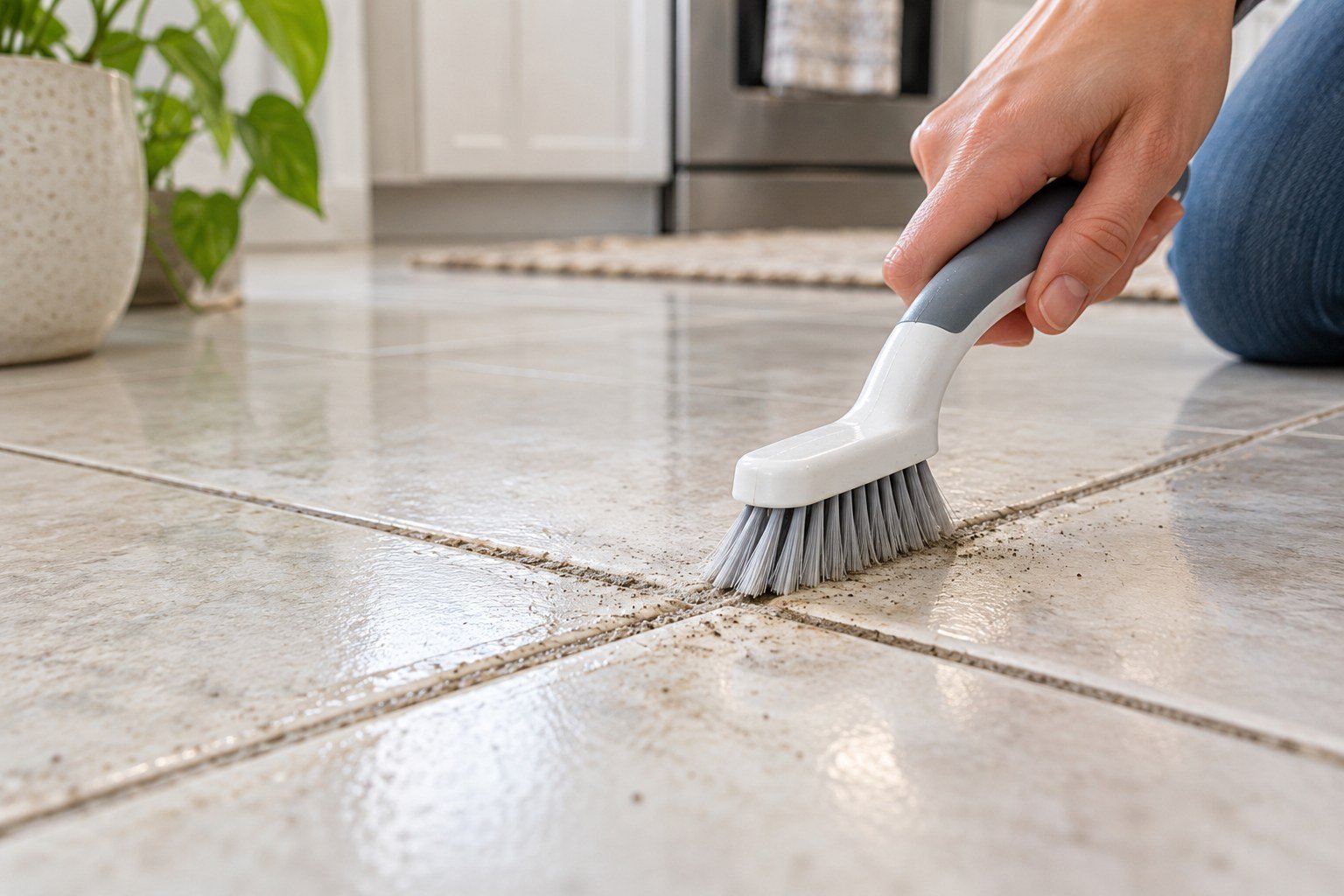
Daltile recommends fresh water rather than dirty mop water, followed by rinsing and removal of excess water. Cleaner left behind can affect slip resistance. A soft brush can help reach grout lines without jumping straight to an aggressive abrasive.
Natural stone requires a different maintenance program. Do not apply ceramic-tile advice to marble or other stone without checking the stone’s care requirements. Grout sealer needs also depend on the grout and installation.
The kitchen tile looks clean, but traffic lanes still look dark at the joints. Work on a small section with a compatible grout cleaner and soft brush, then rinse and dry as directed.
Care reference: Daltile tile care guidance. Follow the guide for your exact product.
Frequent vacuuming removes soil before it works deeper into carpet. Adjust the vacuum and brush setting for the carpet’s construction; follow the carpet manufacturer’s equipment guidance.
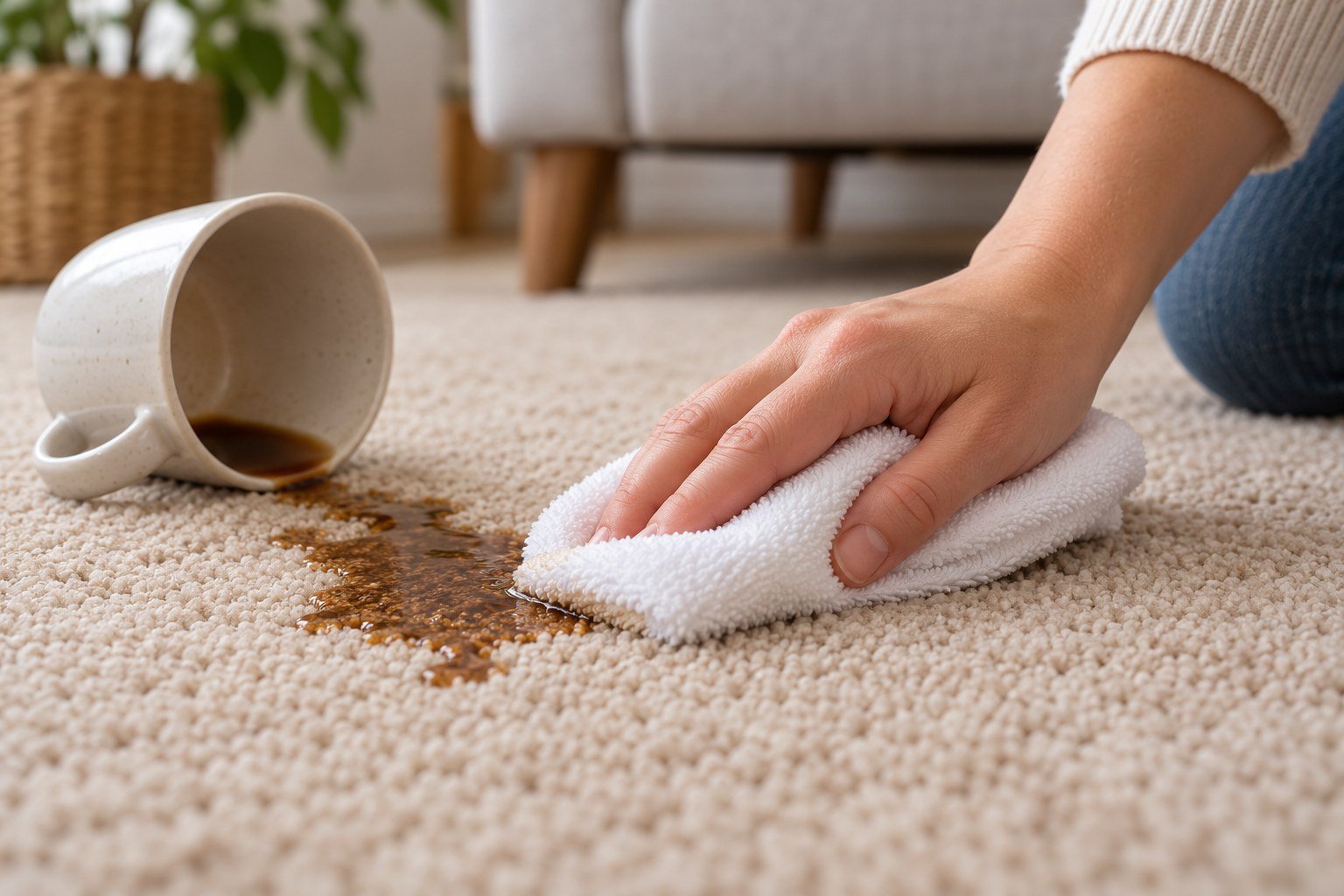
Blot liquid with a clean white absorbent cloth. Avoid aggressive rubbing. Use an approved spot cleaner, test it first, and follow the directions rather than saturating the backing.
Arrange professional cleaning according to the product’s care and warranty requirements. Professional hot-water extraction is a different process from using a household hard-floor steam mop on carpet.
Coffee spills beside the sofa. Blot first, check the approved stain-removal method, and treat a small area. If the stain persists, get help before repeated scrubbing damages the texture.
Care reference: Shaw Floors carpet care guidance. Follow the guide for your exact product.
Start with the method in the middle column, and check the right-hand column against your product’s care guide before using it.
| Surface | Start here | Check before using |
|---|---|---|
| LVP | Sweep, remove spills, use approved cleaner | Steam, vinegar and abrasive products |
| Laminate | Dry soil removal and approved laminate care | Wet mopping or a generic water-based recipe |
| Hardwood | Dry soil removal and finish-compatible care | Water, steam, oils, waxes or polish |
| Tile & grout | Compatible cleaner, fresh-water rinse as directed | Acidic cleaners, aggressive pads and stone compatibility |
| Carpet | Suitable vacuum and prompt blotting | Spot chemicals, brush settings and extraction requirements |
Only if the product is approved for every surface you intend to clean. A label saying “multi-surface” does not replace the floor manufacturer’s instructions.
No. Waterproof claims and heat compatibility are separate questions. Check the exact product’s care guide before using steam; do not treat steam as a required final cleaning step.
No. Cleaning and sanitizing are different claims. If a disinfectant is needed, confirm compatibility with the flooring and follow its label, including contact time. Do not substitute an improvised recipe.
Use traffic and visible soil as your guide, within the product’s care instructions. Busy entrances may need frequent dry cleaning and spot attention, while a lightly used room may need less. More liquid is not a better maintenance plan.
Record the product name and give the customer the manufacturer’s care guide at handoff. Include the cleaner and method allowed, any initial cleaning restrictions, and where to find the warranty. That gives the next person a clear starting point.
Bring your product name, a leftover carton label or a sample to Flooring Pros. We can help you work out what flooring you have and look for the right care information before you spend money on another cleaner.

Built to help contractors keep flooring jobs moving -with materials, pricing, install support, and estimating tools from one place.

246 Bobby Jones Expy Suite A2, Augusta, GA 30907
© Flooring Pros Of Augusta 2026. All Rights Reserved
Privacy Policy | Accessibility | Sitemap